Top Reasons WhatsApp Marketing Campaigns Fail Before They Start
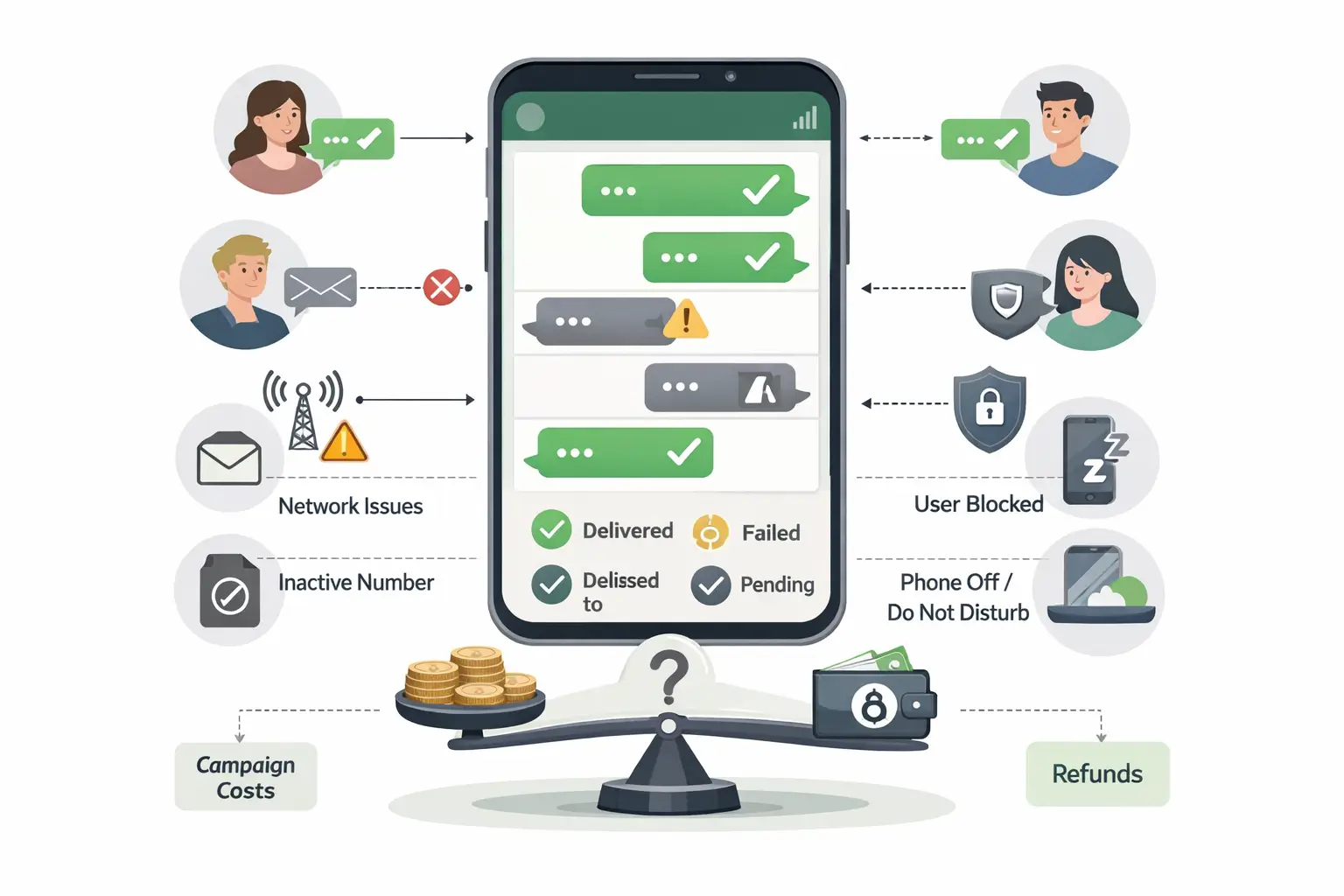
Most people think WhatsApp marketing fails because messages don’t deliver, numbers get blocked, or tools don’t work.
That belief itself is one of the biggest reasons campaigns fail.
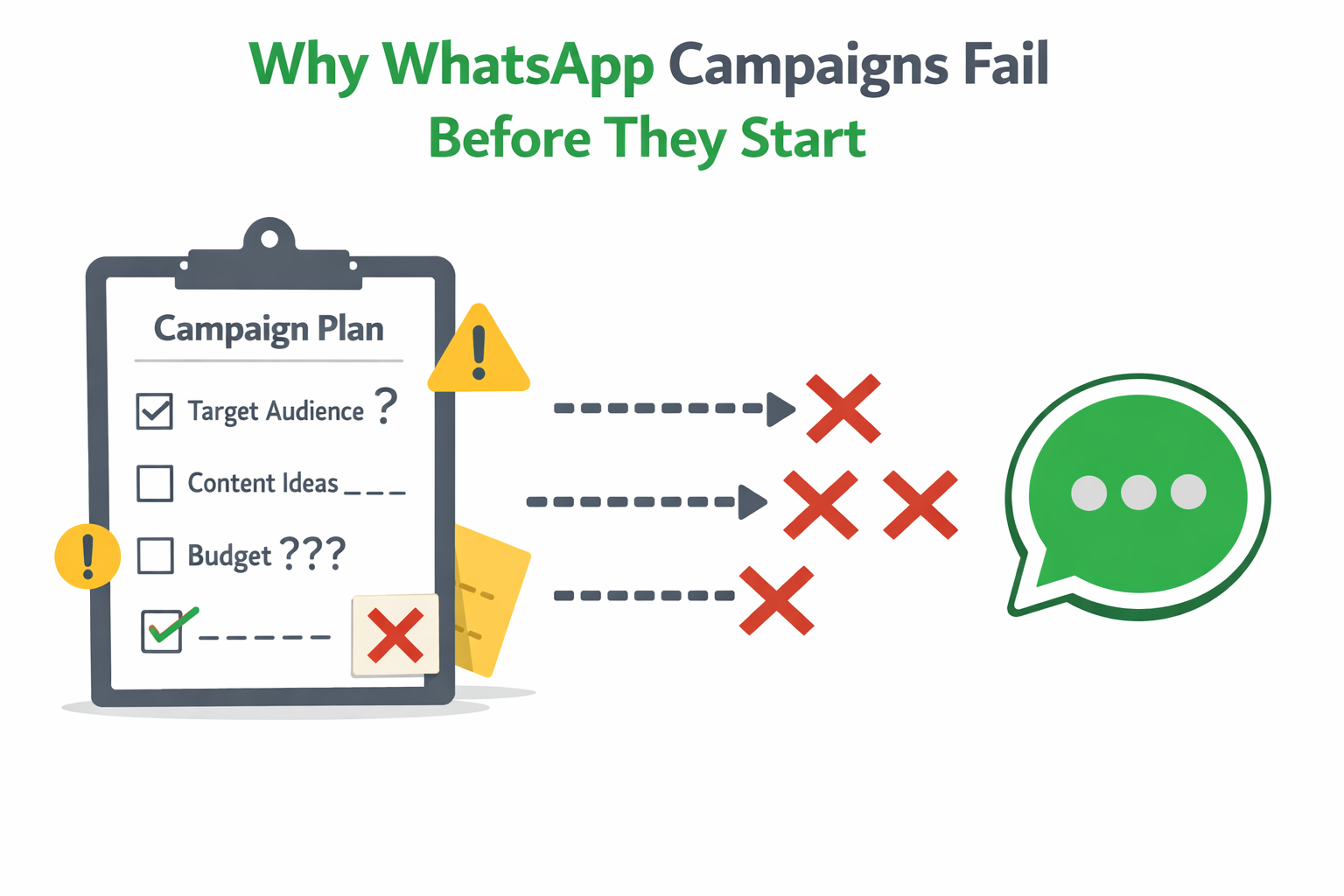
In reality, many WhatsApp marketing campaigns fail before anything is sent, because the decisions made at the start are weak.
This blog explains the human and planning mistakes that cause WhatsApp campaigns to fail even before execution begins.
1. Starting WhatsApp Marketing Without a Clear Reason
Many businesses start WhatsApp marketing because:
-
Others are doing it
-
Someone suggested a tool
-
It looks cheap and fast
They do not ask a simple question:
Why do we want to use WhatsApp?
WhatsApp works best for:
-
Updates
-
Announcements
-
Time-sensitive information
Campaigns fail when WhatsApp is used just because it is available, not because it fits the communication need.
2. Confusing Phone Numbers With an Audience
A very common assumption is:
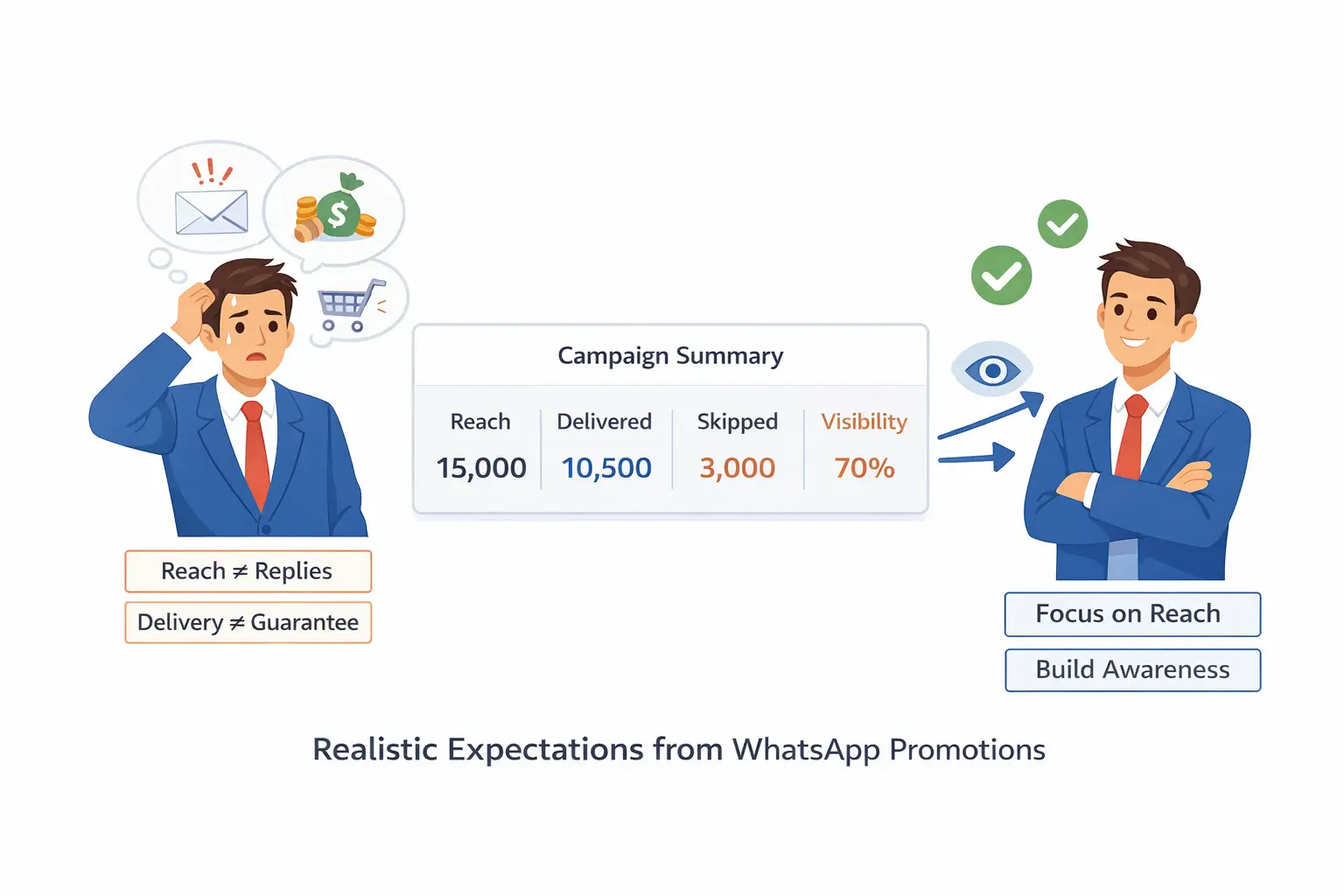
“We have 15,000 numbers, so we have an audience.”
This is not true.
An audience means:
-
People know your brand
-
People expect communication
-
People understand why you are messaging
When businesses message people who are not expecting them, campaigns feel intrusive and fail emotionally — even before results are checked.
If you are unclear about how bulk WhatsApp campaigns actually work at scale, it helps to understand what bulk WhatsApp marketing is and how it works in real scenarios.
3. Writing the Message Before Defining the Outcome
Most teams begin with:
-
“Let’s write a message”
-
“Let’s add an offer”
-
“Let’s add a link”
They forget to decide:
-
What should the user understand?
-
Is awareness enough?
-
Is action optional or required?
When outcomes are unclear, campaigns fail even if messages are sent.
4. Expecting WhatsApp to Fix Weak Marketing
WhatsApp is often used to fix:
-
Low brand awareness
-
Poor offers
-
Weak messaging on other channels
This does not work.
WhatsApp amplifies what already exists.
If the message has no value, WhatsApp only delivers that problem faster.
This is why promotional WhatsApp campaigns should be used carefully and realistically, not as a shortcut to instant results.
5. Treating WhatsApp as a One-Time Blast Channel
Many campaigns are planned like this:
-
One message
-
One attempt
-
One expectation
Communication does not work that way.
WhatsApp works better when treated as:
-
A communication layer
-
Not a one-time action
-
Not a last-chance channel
Campaigns fail when businesses expect one message to solve everything.
6. Copying Campaign Ideas Without Context
Businesses often copy:
-
Message formats
-
Timing
-
Campaign ideas
Without understanding:
-
Audience differences
-
Brand trust levels
-
Context differences
What works for a large brand may fail for a small business.
What works for a political campaign may fail for a local store.
Blind copying leads to early failure.
7. No Ownership When Campaigns Don’t Work
When campaigns fail, blame usually goes to:
-
Tools
-
Platforms
-
Vendors
Very few teams review:
-
Whether the audience was right
-
Whether the message was expected
-
Whether the timing made sense
Without ownership, the same mistakes repeat again and again.
8. Confusing Activity With Strategy
Sending messages feels productive.
But activity is not strategy.
Campaigns fail when teams:
-
Send without purpose
-
Measure without clarity
-
Repeat without learning
WhatsApp marketing needs thinking before sending, not just action.
What Teams That Succeed Do Differently
Teams that avoid early failure:
-
Decide why before deciding how
-
Accept WhatsApp’s limitations early
-
Design campaigns around people, not volume
-
Treat WhatsApp as communication, not automation
Platforms like MsgReach are built around this realistic approach, focusing on planning, control, and expectations rather than shortcuts.
Frequently Asked Questions (FAQs)
Can a WhatsApp campaign fail even before sending?
Yes. Poor planning, wrong expectations, and unclear goals can cause failure before execution starts.
Is failure always caused by tools or platforms?
No. Most failures are caused by decision-level mistakes, not technology.
Does better content guarantee success?
No. Content helps, but strategy and audience understanding matter more.
Can planning really improve results?
Yes. Planning reduces risk and disappointment, but it does not remove limitations.
Final Conclusion
WhatsApp marketing does not fail because WhatsApp is strict or limited.
It fails because businesses rush execution without clarity.
When strategy is clear, WhatsApp becomes useful.
When strategy is weak, WhatsApp only exposes that weakness faster.