How to Monitor WhatsApp Campaigns Without Misinterpreting Data
monitor WhatsApp campaigns
Running a WhatsApp campaign is easy.
Understanding the data correctly is what most businesses struggle with.
Many businesses open their campaign report and panic.
They assume delivery failed or something went wrong.
In most cases, the campaign worked normally.
The problem is how the data is interpreted.
This guide explains how to monitor WhatsApp campaigns clearly, calmly, and correctly.
Why WhatsApp Campaign Data Often Looks Confusing
monitor WhatsApp campaigns
WhatsApp is not email.
It is not SMS.
Still, many businesses judge WhatsApp campaigns using email logic.
That is where confusion begins.
If you do not clearly understand
what bulk WhatsApp marketing actually is,
campaign reports will always feel unclear.
Before analysing numbers, it is important to understand
what to know before running your first WhatsApp promotional campaign.
The Most Important Rule to Remember
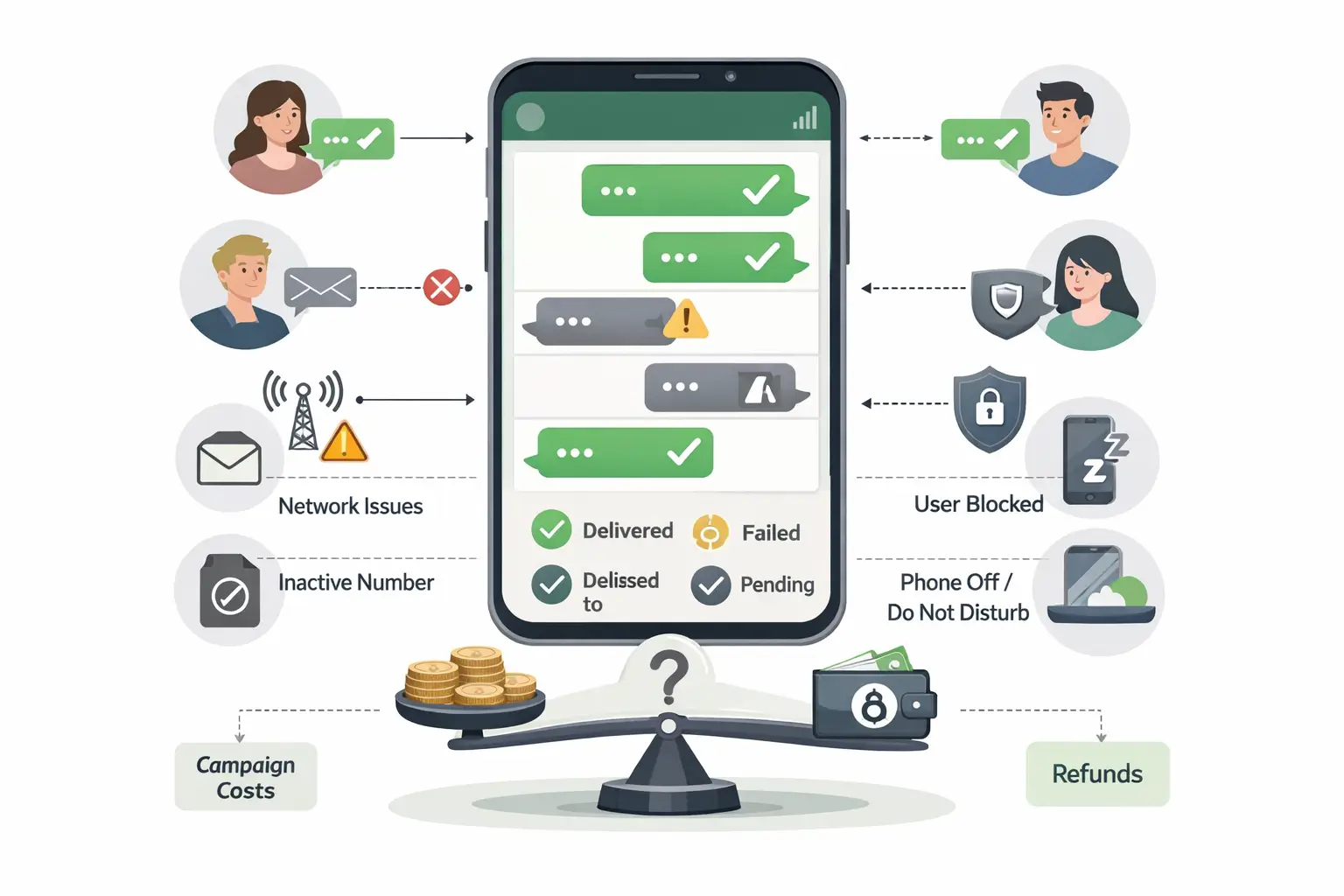
WhatsApp controls final delivery.
No platform can force WhatsApp to deliver messages to every number.
That is why
WhatsApp campaign delivery is never 100 percent.
Any service promising guaranteed delivery is misleading.
Good systems reduce risk.
They do not remove it.
How a WhatsApp Campaign Actually Runs
monitor WhatsApp campaigns
WhatsApp campaigns do not send all messages at once.
They follow a controlled flow explained in
WhatsApp promotional campaign flow.
In simple terms:
-
Numbers are queued
-
Messages are sent gradually
-
WhatsApp checks behaviour and safety signals
-
Messages are delivered or skipped
This structure protects users and sender numbers.
Understanding Campaign Status Without Confusion
This is where most misinterpretation happens.
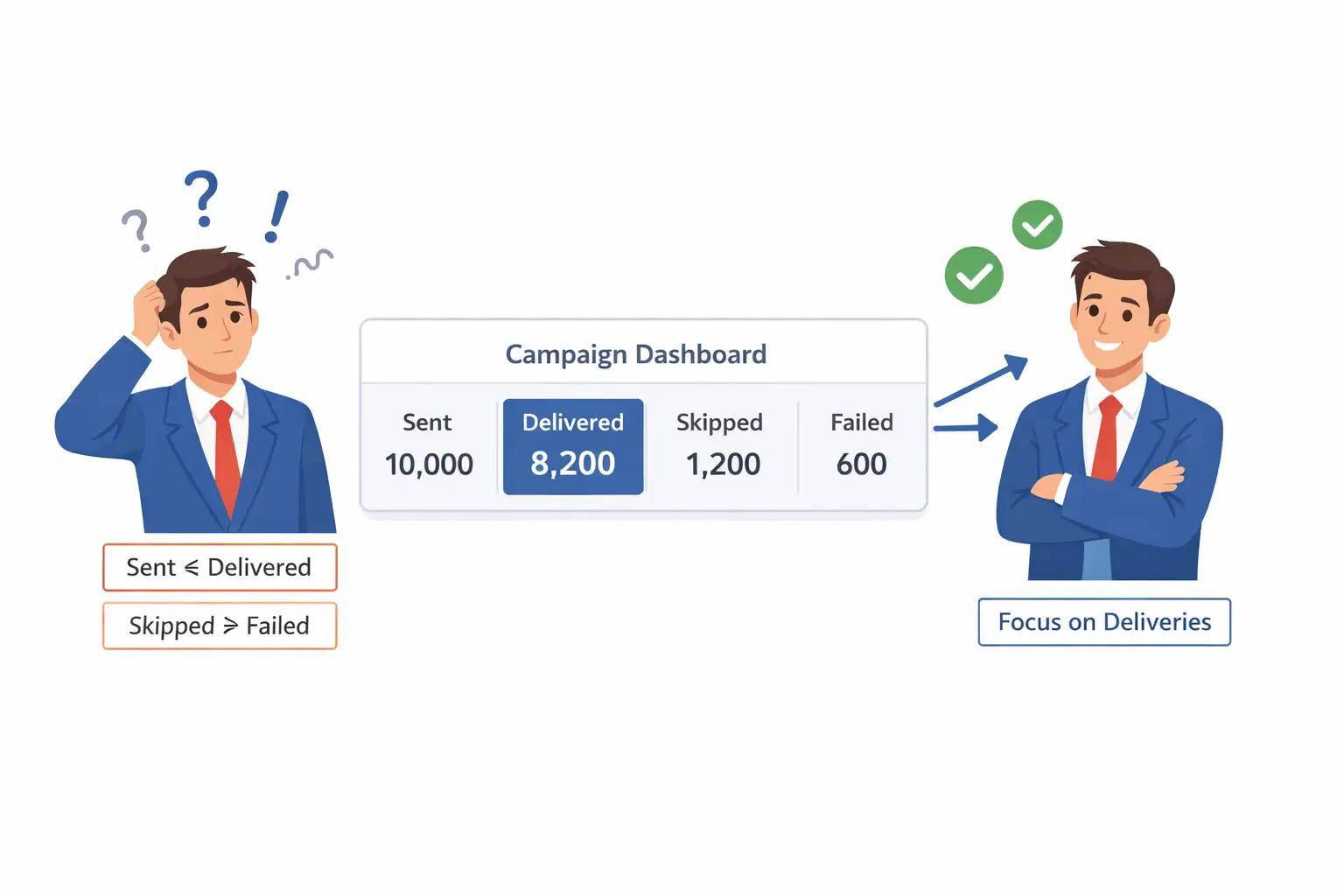
Sent
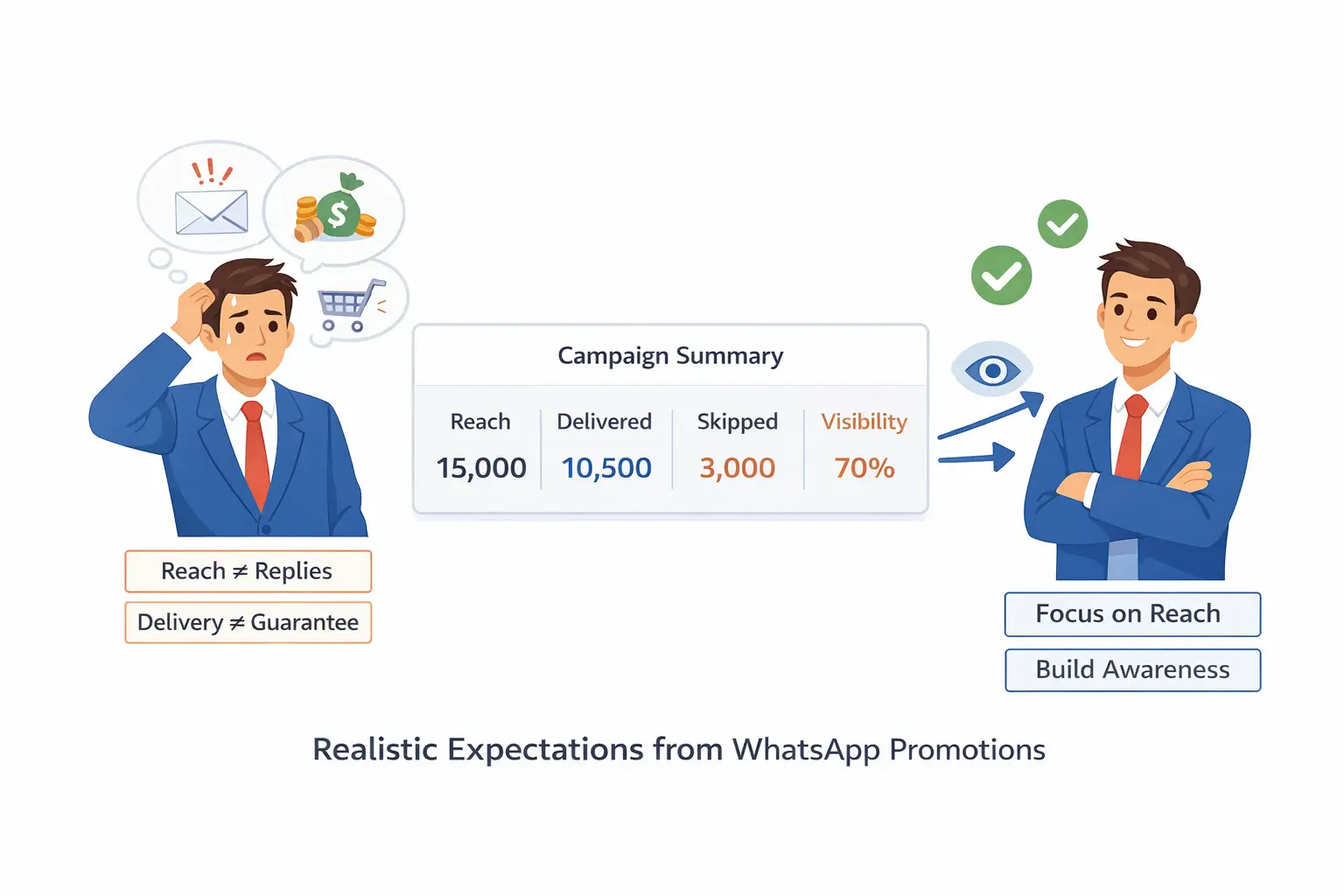
Sent means the system attempted delivery.
It does not mean the message reached the user.
Delivered
Delivered means WhatsApp accepted the message.
This is the real reach of your campaign.
Campaigns that use
distributed sending for WhatsApp promotions
usually show healthier delivery patterns.
Skipped
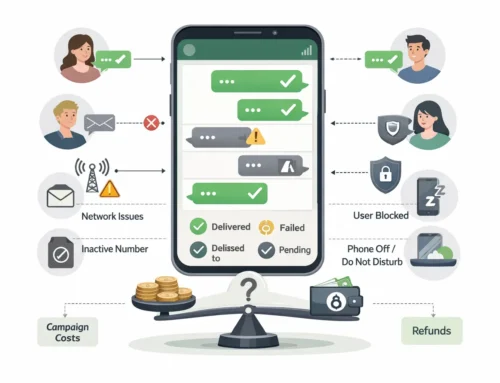
Skipped messages are not failures.
They happen because WhatsApp applies safety logic through
WhatsApp promotional abuse detection systems.
Skipping is a protective action, not a problem.
Why “Failed” Messages Are Often Misunderstood
Seeing failed messages creates panic.
In reality, failures often occur due to:
-
Volume pattern signals
-
Behaviour triggers
-
Content-related risks
These are explained clearly in
how WhatsApp detects promotional abuse using volume patterns and signals.
A failed message does not automatically mean platform failure.
Why Cheap WhatsApp Tools Create Bad Data
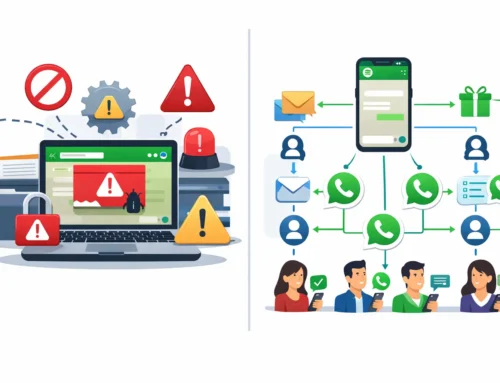
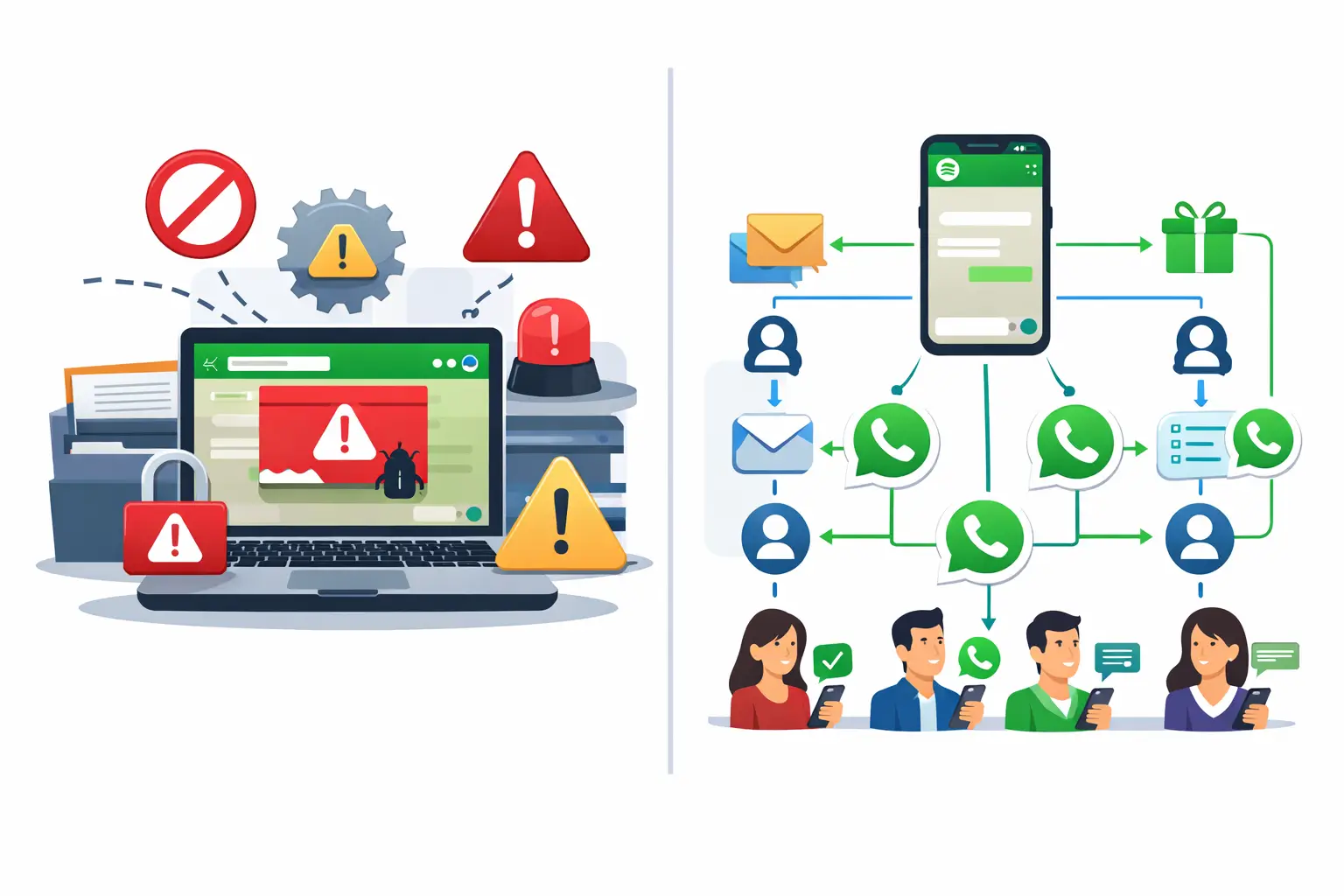
Cheap WhatsApp tools push messages too fast.
They ignore WhatsApp safety limits.
This leads to:
-
Number blocks
-
Sudden delivery drops
-
Unstable reports
That is why
cheap WhatsApp marketing often leads to number blocks.
Why Replies Are Not the Right Success Metric
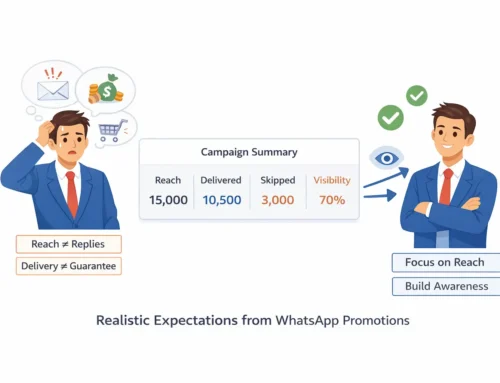
Replies do not define success.
WhatsApp campaigns are widely used for:
-
Awareness
-
Political communication
-
Local business updates
This behaviour is visible in
how political campaign teams use WhatsApp for voter outreach,
how high-reach awareness campaigns work on WhatsApp, and
what works and fails for local businesses on WhatsApp.
Many users read silently.
They act later.
How to Monitor Live Campaigns Without Panic
Do this:
-
Look at overall delivery trends
-
Allow reports to stabilise
-
Compare with realistic expectations
Do not do this:
-
Watch minute-by-minute numbers
-
Panic early
-
Expect perfection
This calm approach leads to better decisions.
How MsgReach Helps You Read Data Clearly
Clear systems create clear reports.
MsgReach focuses on:
-
Safe delivery at scale
-
Live handling of number issues
-
Honest reporting
This approach is explained in
how MsgReach delivers WhatsApp campaigns at scale and
what makes MsgReach reliable for large WhatsApp campaigns.
MsgReach also avoids false promises, which is why it clearly explains
why it avoids no-block or guaranteed delivery claims.
Why Refund Confusion Happens After Campaigns
Refund disputes usually happen because:
-
Skipped messages are treated as losses
-
WhatsApp behaviour is misunderstood
-
Expectations are unrealistic
Refunds apply only when the system fails.
Not when WhatsApp limits delivery.
This is clearly explained in
why refunds are not always possible in WhatsApp campaigns.
Final Truth You Should Remember
WhatsApp campaigns are risk-managed communication systems.
They are not guaranteed broadcasts.
When you understand:
-
Campaign flow
-
Delivery behaviour
-
Safety limits
You stop misinterpreting data and start making better decisions.
Key Takeaways
-
Sent does not mean delivered
-
Skipped is not failure
-
Failed does not always mean error
-
Replies do not equal success
-
WhatsApp controls delivery
Frequently Asked Questions (FAQs)
What is the biggest mistake businesses make while monitoring WhatsApp campaigns?
They expect WhatsApp campaigns to behave like email or SMS. WhatsApp follows its own delivery rules.
Does “sent” mean the message was delivered?
No.
“Sent” only means the system attempted delivery. Delivery happens only when WhatsApp accepts the message.
Why is WhatsApp delivery never 100 percent?
Because WhatsApp controls final delivery. Inactive numbers, user restrictions, and safety signals affect delivery.
Are skipped messages a sign of failure?
No.
Skipped messages are a safety mechanism. They protect campaigns from higher risk and number blocks.
Should I worry if I see failed messages?
Not always. Many failures are temporary or WhatsApp-side behaviour.
Are replies the right way to measure campaign success?
No. Many campaigns aim for awareness and reach, not replies.
Can refunds be claimed for skipped messages?
No. Refunds apply only if the sending system fails, not when WhatsApp limits delivery.