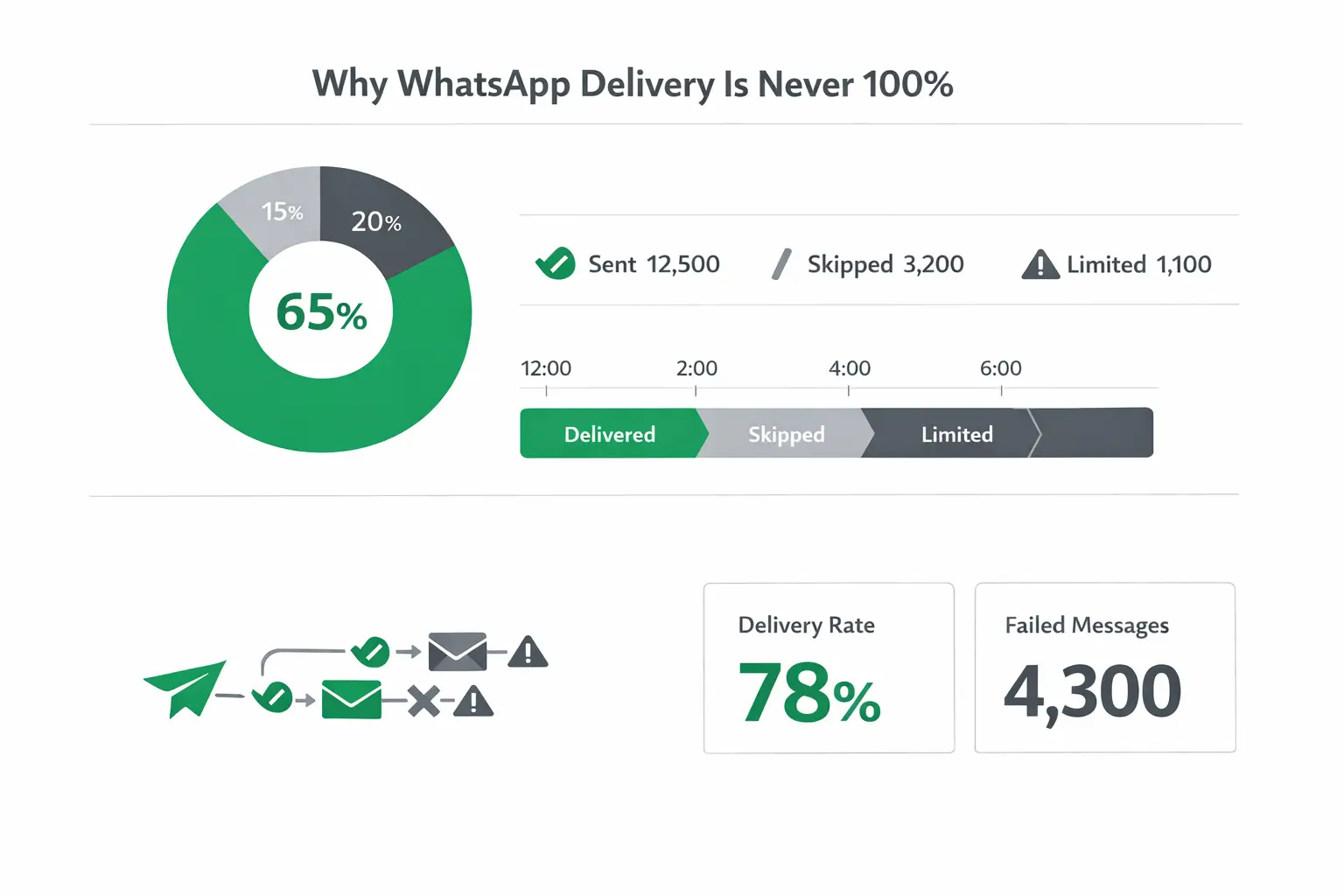
Why WhatsApp Campaign Delivery Is Never 100% (The Reality Businesses Must Accept)
Many businesses run WhatsApp promotional campaigns and then ask one question:
“Why didn’t all messages get delivered?”
Some messages show as delivered, some fail, and some never reach users at all. This often leads to confusion, arguments with service providers, and unrealistic expectations.
The truth is simple and important to understand:
WhatsApp campaign delivery is never 100%.
This blog explains what delivery really means, why failures happen, and how businesses should measure success realistically.
What “Delivery” Actually Means in WhatsApp Campaigns
Many people think delivery means:
“Message sent = message received”
This is not correct.
In WhatsApp campaigns:
-
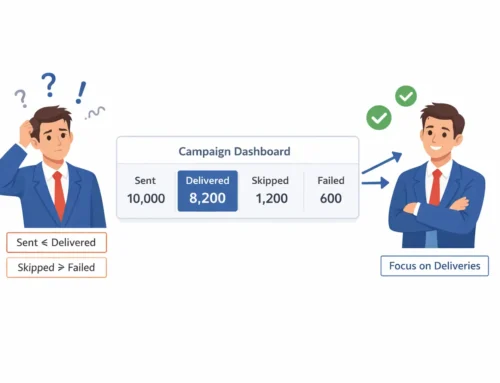
Sent means the system tried to send the message
-
Delivered means the message reached the user’s device
-
Read means the user opened it
Delivery does not mean the user saw, liked, or responded.
If you are new to WhatsApp promotions, it helps to first understand what WhatsApp marketing is and how bulk campaigns actually work.
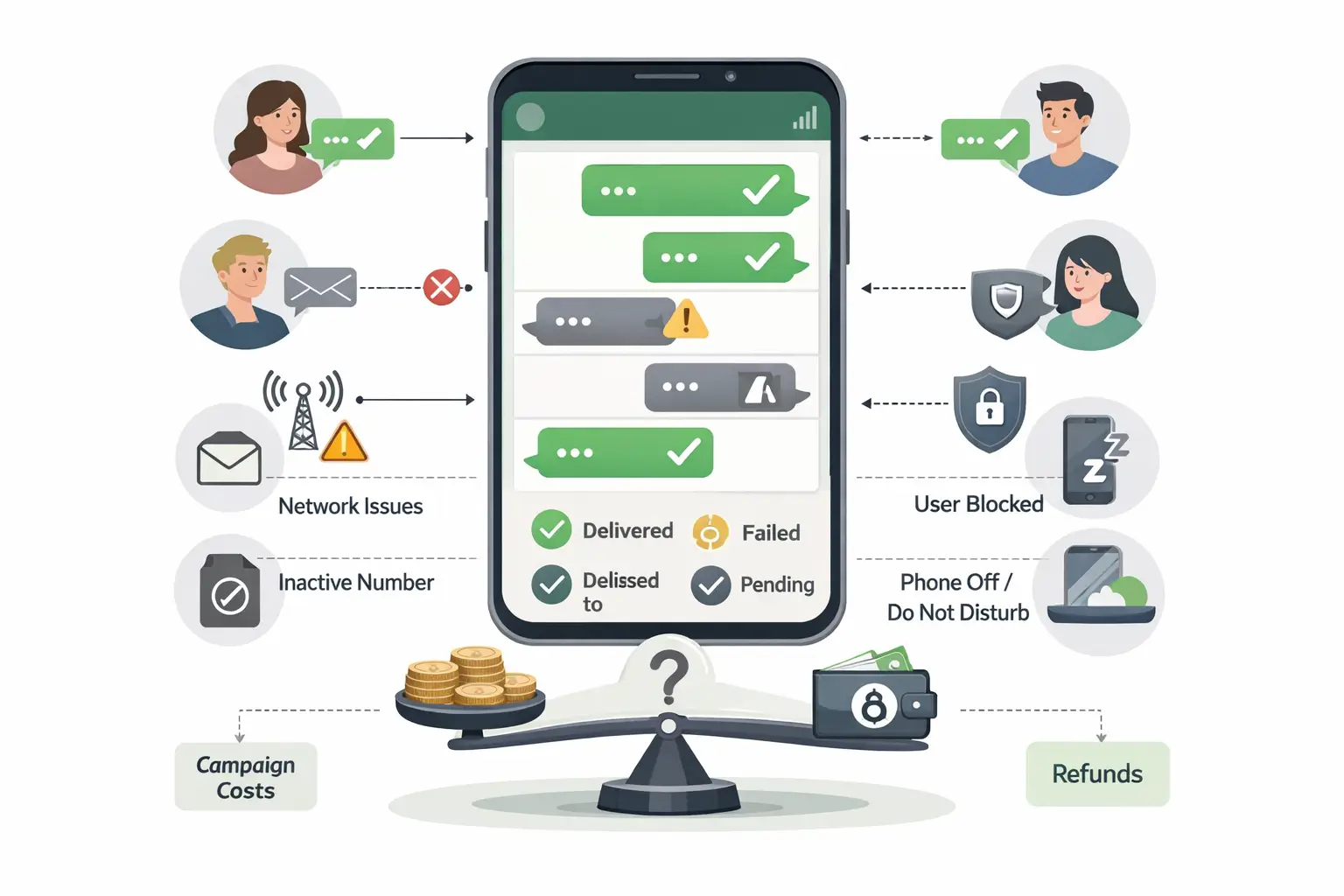
Common Reasons WhatsApp Messages Fail to Deliver
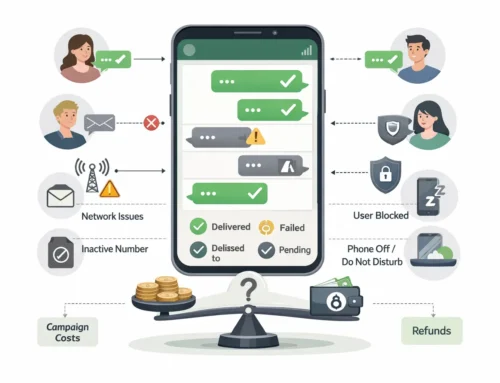
Message failures are normal in large campaigns. Below are the most common reasons.
1. User Is Offline or Inactive
If a user:
-
Has no internet
-
Has switched off data
-
Has not used WhatsApp for a long time
Messages may not deliver.
WhatsApp does not hold messages forever for inactive users.
2. User Has Blocked the Sender
If a user blocks your WhatsApp number:
-
Messages will not be delivered
-
No error message is shown clearly
-
Delivery simply fails
This is common in promotional campaigns, especially when messages are unexpected.
3. Number Restrictions or Temporary Blocks
If the sending number shows risky behaviour, WhatsApp may limit it.
This includes:
-
Reduced delivery
-
Partial sending
-
Temporary restrictions
If you have not read it yet, you should understand why WhatsApp numbers get blocked during promotional campaigns, as blocking directly affects delivery.
4. High Volume Sent Too Quickly
Sending a very large number of messages in a short time increases delivery failures.
Many guides talk about instant bulk sending, such as tutorials explaining how to send 10,000 WhatsApp messages in one click, but in real campaigns, such behaviour often reduces delivery instead of improving it.
5. WhatsApp System Filtering
WhatsApp uses internal systems to protect users from spam.
Messages may fail when:
-
The same message is repeated many times
-
Links look suspicious
-
Behaviour looks automated
These filters do not block everything, but they reduce delivery gradually.
Why Sending More Messages Does NOT Increase Delivery
Many businesses believe:
“If I send more messages, I will get more delivery.”
This is a mistake.
Higher volume often leads to:
-
Lower delivery rate
-
More blocks
-
Faster restrictions
This is why bulk WhatsApp marketing must be used carefully, not aggressively. Articles like the truth about bulk WhatsApp marketing services in India and what to avoid explain this problem in detail.
The Myth of “100% WhatsApp Delivery”
Some vendors claim:
-
“100% delivery”
-
“No failure”
-
“Guaranteed reach”
These claims are unrealistic.
No platform can control:
-
User internet
-
User behaviour
-
Blocking actions
-
WhatsApp internal systems
Because of this, 100% delivery is not possible, especially in promotional campaigns.
Businesses should be careful of services that promise perfect results.
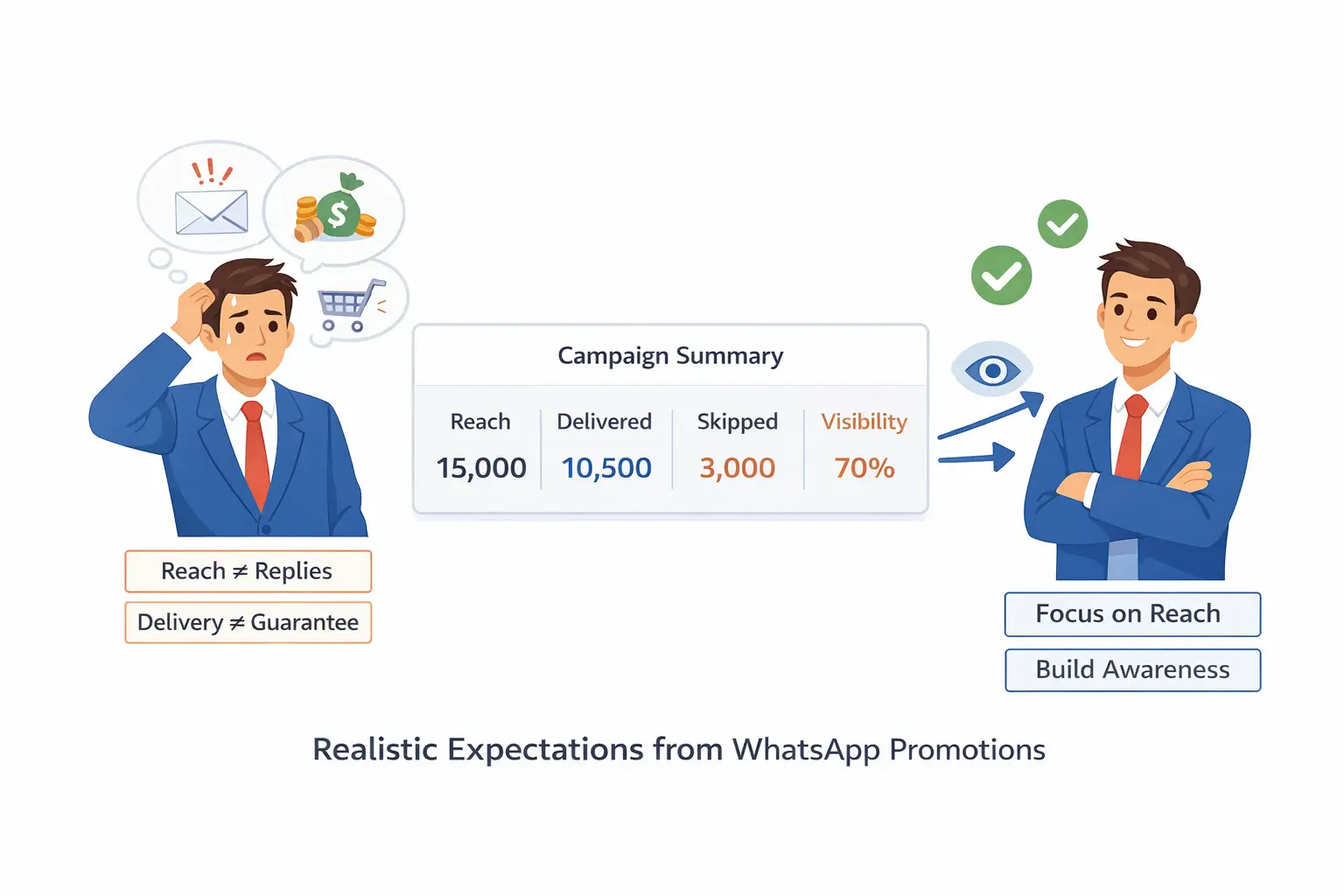
How Businesses Should Measure WhatsApp Campaign Success
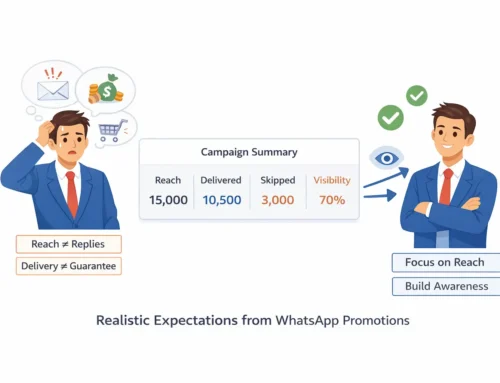
Instead of focusing only on delivery percentage, businesses should look at:
-
Reach: how many users were attempted
-
Partial delivery: how many messages reached devices
-
Awareness: how many users became aware of the message
-
Trends: delivery patterns across campaigns
Promotional WhatsApp campaigns work best for announcements and awareness, not guaranteed responses. This is also why articles like sending WhatsApp mass messages that convert should be read with realistic expectations.
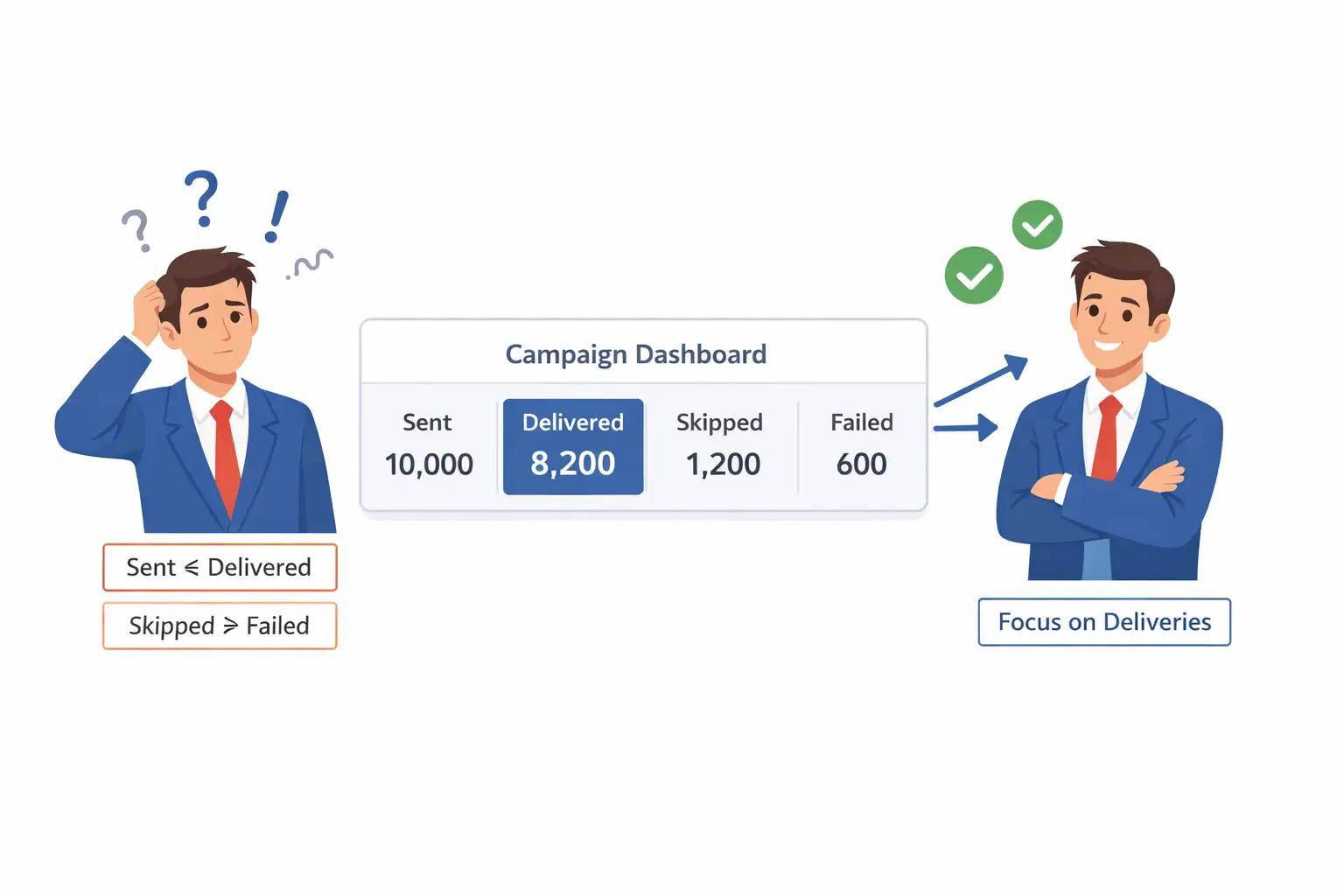
What a Healthy WhatsApp Campaign Looks Like
A realistic campaign usually has:
-
Some delivered messages
-
Some failed messages
-
Some skipped numbers
-
Stable behaviour over time
A campaign with 0 failures is often a warning sign, not a success sign.
How Risk Can Be Reduced (But Not Removed)
No system can remove delivery failure completely.
What businesses can do is reduce risk by:
-
Controlling message speed
-
Avoiding single-number dependency
-
Monitoring failures instead of retrying blindly
-
Pausing campaigns when delivery drops
This system-based approach is followed by platforms like MsgReach, which focus on managing behaviour rather than selling shortcuts.
Frequently Asked Questions (FAQs)
Can WhatsApp delivery be improved?
Yes, delivery can improve with controlled sending and better behaviour, but it will never reach 100%.
Does retrying failed messages help?
Repeated retries often increase risk. Retries should be limited and monitored.
Does WhatsApp Business app increase delivery?
No. Business and personal apps follow the same delivery rules.
Is message failure normal?
Yes. Some level of failure is normal in all large WhatsApp campaigns.
Can any tool guarantee WhatsApp delivery?
No. Any tool promising guaranteed delivery should be avoided.
Final Conclusion
WhatsApp campaign delivery is never perfect, and that is normal.
Failures happen because of:
-
User behaviour
-
Network conditions
-
Platform limits
-
Risk controls
Businesses that accept this reality:
-
Plan better
-
Avoid panic
-
Build sustainable campaigns
In the next blog, we will explain why most WhatsApp marketing campaigns fail before they start, and how planning mistakes create problems even before sending begins.